
Now that most primaries, runoffs and special elections are over throughout the country, with much discussion taking place about the influence of Democratic Socialism on the one hand and Trump’s relentless pursuit of power on the other, it is worthwhile to take a look at some of the most interesting and crucial matchups going into the November 3 general election. We will do this in alphabetical order by state, with Part I examining Alabama through Kansas, Part II (September post) tackling Kentucky through New York, and Part III (October post) finishing up with North Carolina through Wyoming. In the interests of space, we will omit states that have relatively little controversy or national interest (with apologies for oversights).
Even if a reader’s state is not represented in a given post, pro-democracy candidates throughout the nation – whether for Senate, US House, Governor, or others – can benefit from financial support from outside voters.  We know that massive amounts of money from the right are supporting dangerous, anti-democratic candidates, so those of us in the Democracy Coalition must fight back as much as we are able.
Alabama
Redistricting grabbed the headlines in the primaries because of Republicans’ desperate desire to keep the US House of Representatives; operating “under a new map that eliminates one of [Alabama’s] two majority-Black districts currently represented by Democrats,” voters in four of seven districts selected new House members in a special primary on August 11th. However, it is the gubernatorial election that will probably ring bells for many Americans. 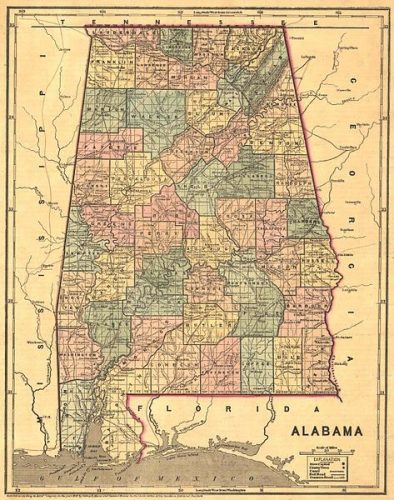 In the primary on May 19, GOP Senator Tommy Tuberville and former Democratic Senator Doug Jones won their primaries and will face off for Governor, reprising their 2020 Senate match. While Jones is favoring raising the minimum wage, better, more affordable health care, expanding Medicaid to make health care work, creating better jobs, and investing in small businesses, Tuberville says he is “running against socialism and communism [and] against people that believe in killing the unborn.”
Americans may remember Tuberville from his audacious 10-month stalling of military promotions in protest against the Pentagon’s policy that “allowed service members time off and travel reimbursement for seeking abortions and fertility treatment” and reimbursement for travel in some abortion-related cases. Because of Tuberville, “approval of over half of the military’s general and admiral positions was held up,” forcing the Pentagon to appoint acting heads of several branches. Under great pressure (even from fellow Republicans), Tuberville finally dropped his hold, but we must not forget the damage that one powerful Senator can inflict on our society.
Alaska
Due to election reforms passed in Alaska in 2020, “the top four candidates in each primary – regardless of party – will advance to a ranked choice voting (RCV) general election,” which could result in interesting combinations of Republicans, Democrats and others appearing on the ballot. The voters have now spoken in the August 18th primary, especially in the critical races for Governor and Senator.
The Governor race is very significant. However, with 17 candidates on the primary ballot (most of them Republicans) and not all votes having been counted, the result – the top four candidates who will be selected – may not be known for several weeks. Early results show two Democrats – former state Rep. Jonathan Kreiss-Tomkins and former state Sen. Tom Begich – leading.
In the Senate, incumbent GOP Sen. Dan Sullivan will compete against former US Rep. Mary Peltola, who had bested former Alaska governor and vice presidential candidate Sarah Palin to win her House seat in 2022. Peltola’s positions include reproductive rights and climate change regulation, and she focuses on the importance of hunting, fishing, oil drilling, and mining in Alaska. She is hoping to become the first Alaska Native elected to the Senate, and Democrats nationwide hope she will be able to flip this seat in their favor.
Sullivan, a veteran who has held his seat since 2015, is an ally of Trump and “campaigned on supporting the military, opening more land for oil and gas extraction, and voting for Trump’s signature tax and spending law.” He accuses Democrats of placing “a target on Alaska, such as opposing opening the Arctic National Wildlife Refuge to oil drilling.”
Arizona
The race for Governor in Arizona pits incumbent Democrat Katie Hobbs against US Representative Andy Biggs, “a fierce ally of President Donald Trump and former head of the House Freedom Caucus.” While “Democrats now hold both U.S. Senate seats and the top three state offices” in the State, Hobbs’ contest is slated to be one of the closest governor’s races in the country. Americans will probably remember that Hobbs barely beat Trump-supported “firebrand Kari Lake” in the 2022 election – an election that Lake never conceded, even after losing several lawsuits. Lake also never conceded the loss of her 2024 Senate contest, only maintaining that her campaign was over, not that she’d lost.
California
California was the first state to push back against Trump and the Texas legislature’s redistricting efforts to try to win more Republicans to the US House in the midterms. In a special election in November 2025, California voters approved Proposition 50 (64 to 36 percent). This had some effect in the June primaries, but “for the US House, steady Democratic support translated through the new gerrymander to roughly 10 more seats than in 2024.” 
The other change in the way that California conducts elections, Proposition 14, raised concerns among Democrats that two Republicans might be finalists for governor, with Gavin Newsom having to step down due to term limits. In 2010, Proposition 14 decreed for all state elective offices and congressional offices that the “two candidates with the most votes – even if they hail from the same party – move on to the fall election.” Fortunately for Democrats, the two candidates who will face each other for governor will be Democrat Xavier Becerra, current California Attorney General and former US Secretary for Health and Human Services, and Republican Steve Hilton, political commentator and former Fox News host. With early voting starting in October, the latest Berkeley IGS/LA Times Poll shows Becerra with a commanding lead.
Colorado
One of the headline-grabbing races in Colorado in recent months was the primary win by Democratic Socialist Melat Kiros in Colorado’s 1st Congressional District. A political newcomer and lawyer, Kiros, 29, defeated long-time US Democratic Rep. Diana DeGette and will face Republican Christy Peterson, who works at a construction company doing office management and accounting, in November. If she wins, Kiros will “be the first self-identified socialist and the first Black woman to be elected to Congress in Colorado history.”
In the governor’s race, with Jared Polis (D) stepping down due to term limits, the Democratic Attorney General Phil Weiser defeated Sen. Michael Bennet in the Democratic primary. While both candidates campaigned on platforms of affordability and resisting Trump, voters may have appreciated the fact that Weiser has sued the Trump administration 66 times during Trump’s second term. In addition, Weiser favors a “primary care for all” healthcare system and reducing red tape and regulations to add 40,000 “attainable” homes for Coloradans.
Weiser will go against Republican Victor Marx, a Christian fundamentalist, Marine veteran and founder of All Things Possible Ministries. While he has generally not shared too many of his political policies publicly, he has gone on record wanting to codify Second Amendment rights directly into the Colorado State Constitution.
Florida
As of a few days ago, the voters have made their voices heard in several important contests in Florida.
With GOP Governor Ron DeSantis term-limited, the candidates on the November ballot will be Republican US House Rep. Byron Donalds and now-Democrat David Jolly. In many significant ways, Jolly’s large margin of victory over his primary opponent shows how a Republican-turned-Independent-turned-Democrat can draw a wide range of voters to a message of “three simple values: the economy should work for everyone; strengthening our state requires solutions for housing and insurance, healthcare, and education, and everyone’s rights should be protected, and their dignity celebrated.”  Jolly served in Congress from 2014 to 2017 and is a vocal critic of Trump.
Donalds, who served in the Florida House of Representatives from 2016 to 2020, has supported Trump’s agenda and is “a staunch advocate for the Second Amendment, School Choice, Fiscal Sanity, Secure Borders, Law and Order, and a Limited Federal Government.” If elected, Donalds would become the first Black governor of Florida.
In the special election to fill the final two years of Secretary of State Marco Rubio’s Senate term, another candidate who is a member of the Democratic Socialists of America will face a Trump-backed Republican in November. Ashley Moody, who was Florida’s 38th Attorney General from 2019 to 2025, was chosen by DeSantis to fill Rubio’s seat; if elected Senator, she vows to support Trump’s goals of “securing the border, standing up for the rule of law, and continuing her work to ensure that Florida remains safe and prosperous for years to come.” We will note the irony here: the blatant lawlessness of Trump and many of his circle, appointees and Cabinet members is stunning, not to mention the fact that millions of Americans do not feel either safe or prosperous under Trump.
Democrat Angie Nixon, a state representative who is Black, expanded childcare, fought corporate price-gouging, and protested DeSantis’s unfair voting maps. In her Senate run, she is working “to lower costs, raise wages, and build a people-powered government that puts families first – not greedy billionaires.” She won the primary decisively despite being outspent by her opponent, former army intelligence officer and Trump critic, Alexander Vindman, who vows to support Nixon in the general election.
Georgia
Georgia has recently emerged as a critical state in both local and national elections. It is hard to forget that Trump pressured Georgia Secretary of State Brad Raffensperger in January 2021 as Trump attempted to steal enough votes to beat Joe Biden. We also remember that it was two Democrats – the Rev. Raphael Warnock and Jon Ossoff – who won Senate seats in early 2021. Warnock defeated incumbent Republican Kelly Loeffler in the special general runoff election, beat Trump-endorsed professional football player Herschel Walker in 2022, and will be up for reelection in 2028.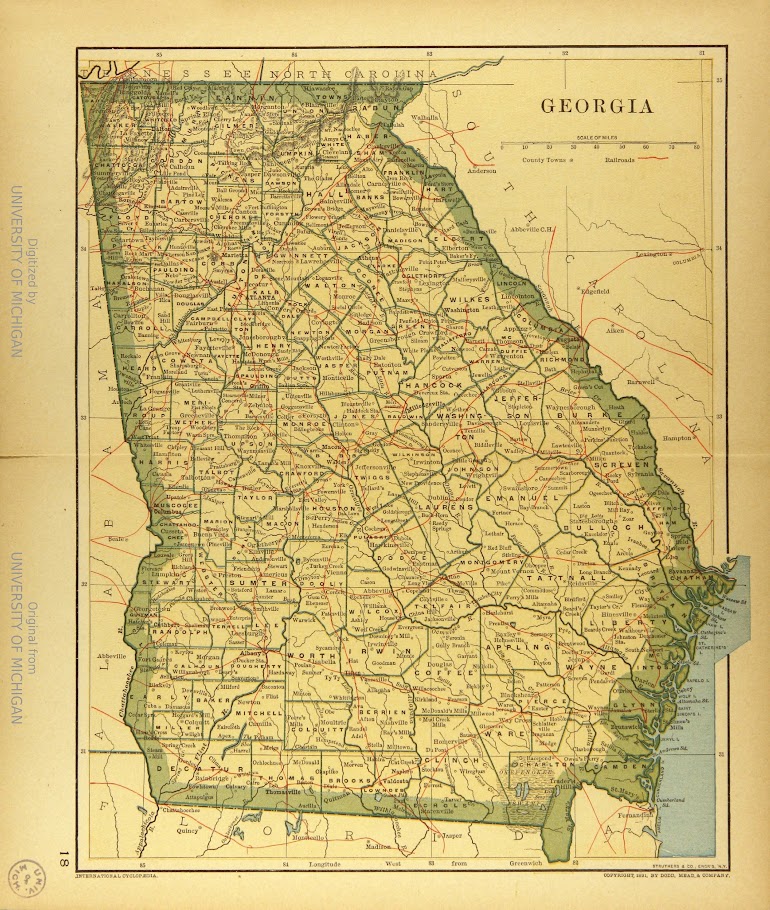
Ossoff, who is now making headlines as he seeks reelection, is “the only Democrat seeking reelection in a state won by Trump in 2024.” His Republican opponent will be Trump-endorsed US Rep. Mike Collins. Ossoff has been blasting Trump on economic issues, including tariffs, as well as Trump’s handling of the Iran war (which he started), his lack of concern for the suffering sailors on the USS Lincoln, and his obsession with the 2020 election (his Big Lie that he beat Joe Biden). Among Ossoff’s accomplishments in his six years as Senator include laws protecting children online, strengthening public safety, tackling the opioid epidemic, investigating unsolved lynchings and Civil Rights murders, bolstering mental healthcare services for veterans, fighting corruption, and improving security in American prisons.
Collins, on the other hand, according to the Atlanta Journal-Constitution, has neo-Nazi and white nationalism ties, including support for neo-Nazi propagandaist David Alan Scheer, his son-in-law. Scheer has been “featured on Collins’ campaign website and social media – until Collins quietly removed him.” If that weren’t enough, Collins is facing “an active federal investigation into the illegal misuse of tax dollars,” and there has been “outrage over his antisemitic harassment of a Jewish reporter and praise for a young man who harassed a Black woman by making monkey sounds.”
The other significant race in Georgia is for governor. Former Atlanta mayor Keisha Lance Bottoms (D, 2018-2022) will face Republican Rick Jackson, who won a close runoff election in June against Burt Jones, the incumbent lieutenant governor. Bottoms, who also served as a senior advisor to President Biden, is promoting “Medicaid expansion, lowering costs, and education;” she vows to “lower health care costs for everyone … by ending the failed Georgia Pathways program, and replacing it with real coverage that actually works for families.”
Jackson, founder and chief executive of Jackson Healthcare, a large healthcare staffing and services company, is running on tax cuts, border security, and his outsider business background, and he promotes “freezing property taxes, cutting the state income tax, eliminating wasteful spending, and raising standards in government and education.” While Jackson spent much of his youth in foster care, he spends little time discussing child welfare issues, instead supporting anti-transgender policies. A purported billionaire who donated $1 million to a pro-Trump super PAC just prior to entering the gubernatorial race, Jackson has targeted “woke ideology’’ and called for increased deportations of undocumented immigrants. He has been quoted as vowing to be like Trump “with a southern tone.’’
Recent polls show Bottoms with a slight lead but within the margin of error.
Illinois
Americans have become very aware of Illinois’ Democratic Governor, JB Pritzker, who is running for reelection against GOP candidate Darren Bailey. (There are several other candidates in the race, representing other parties, but Pritzker and Bailey, who competed before in 2022, are polling ahead.)  Pritzker has become one of the prominent faces against Trump on a wide array of issues. Trump’s reactions to Pritzker’s attacks show that the Illinois governor definitely gets under Trump’s skin.
Bailey, who does not currently hold elected office, served in the Illinois State Senate (2021-2023) and the Illinois House and has worked in farming, trucking and excavating. A committed evangelical Christian, he holds conservative beliefs such as fighting higher taxes, sanctuary state policies, and what he considers reckless spending. (We must also note Bailey’s courage in remaining in this race despite unbearable tragedy: the deaths of his son, daughter-in-law and two grandchildren in a helicopter crash last October.)
In addition to criticizing Trump, Pritzker has led on significant legislation for Illinois and, as a very wealthy heir to the Hyatt Hotel chain, has used his own resources to help other Democratic candidates across the country. While critics complain that this runs counter to the progressive urge to reform campaign financing in the wake of Citizens United, the use of one’s immense wealth on behalf of candidates who are bolstering democracy, rather than destroying it, can also be seen as both admirable and necessary.
The other significant race in Illinois is filling the Senate seat held by retiring Democrat Dick Durbin. While the primary candidates in the Democratic race, Robin Kelly and Raja Krishnamoorthi, led in fundraising, media attention, polling and some name recognition, Lt. Governor Juliana Stratton (D), who is Black and had received financial support from Pritzker, won and will face Republican Don Tracy.
Tracy lobs many of the usual conservative barbs against the left and its “extreme agendas.” His accusations – almost none of which are fact-based – include claiming that the left is against securing the border, gives taxpayer-funded benefits to non-citizens, promotes “boys playing in girls’ sports,” and favors “defunding” the police and criminals over victims. Despite the grotesque lawlessness of Trump and many of his supporters, Tracy maintains that it is the right that holds criminals accountable.
Stratton, who holds a JD and has a background in mediation and conflict management, has worked with “Pritzker to raise wages, lower prescription drug costs, relieve medical debt for thousands of families, and invest in education from early childhood programs to public schools.” She has long been a strong advocate for reproductive rights. If elected, Stratton will join Sen. Tammy Duckworth, which will create an all-women Senate delegation in Illinois for the first time.
Iowa
With incumbent Republican Sen. Joni Ernst announcing that she would not seek a third term, Democrats are hoping to flip her seat. The candidates on the November ballot will be Democrat Josh Turek and GOP US Rep. Ashley Hinson.
Turek, a gold medalist Paralympian and two-term member of the Iowa state House, is “one of the most bipartisan Democrats in the Iowa legislature.” He has passed legislation to support veterans and Iowans with disabilities and to cut taxes for first-time homebuyers and has sponsored bills to raise the minimum wage and protect workers’ right to organize. Among the goals he has if elected to the Senate are strengthening Social Security by ensuring billionaires pay their fair share, repealing cuts to SNAP, and holding “corporations accountable by cracking down on unfair wages and incentivizing policies that benefit workers.”
Rep. Ashley Hinson, who was endorsed by Ernst, has held her seat since 2023 and previously worked as a reporter and news anchor. A Trump supporter, her official campaign site boasts his strong endorsement, with its distinctive spelling habits; he says that Hinson is working hard “to Create Jobs, Cut Taxes, Promote Products and Services MADE IN AMERICA by our incredible Iowa Workers… Stop Migrant Crime, Murderers, and other Criminals from illegally entering our Country,” etc. 
With GOP Governor Kim Reynolds not seeking reelection, the two gubernatorial candidates who will appear on the November ballot will be Democrat Rob Sand and Republican Zach Lahn. Sand, Auditor of State since 2019 who is not running for reelection, had earlier served as chief prosecutor for public corruption cases in the Iowa Attorney General’s office. His platform for governor will build on his record of uncovering “a shockingly high amount of illegal denials of care under Iowa’s Medicaid privatization executive order” by submitting an opposite executive order. Sand also pledges to enact a program similar to one he instituted as Auditor that has revitalized jobs in small towns and rural communities.
Lahn, a farmer and businessman, is running on “common-sense conservative policies” such as protecting life, banning benefits for illegal immigrants, “lessening the tax burden on Iowans … [and] banning Wall Street hedge-funds from buying single family homes [to] help make life affordable for Iowa families.” Lahn also pledges to combat cancer and save the family farm, and his plan to make education #1 in Iowa is to revoke a teacher’s license if s/he “is caught pushing a political agenda in the classroom.”
Kansas
Kansas currently has a Democratic Governor, Laura Kelly, who has won two consecutive terms but is term-limited. As a Democrat, she is almost alone compared with almost all the other elected federal officials in the State – both Senators and three of four US House Representatives are Republican.
While Kelly is likely to be replaced by a Republican, there is an interesting race forming for Senator this year. Incumbent Republican Dr. Roger Marshall will face Democrat and pastor Adam Hamilton in November. Marshall, an obstetrician who has practiced in Great Bend for over 25 years, is an active member and leader at First Christian Church of Great Bend. He has voted in line with Trump’s positions 98% of the time, is anti-abortion, agrees with the Big Lie about the 2020 presidential election (although Marshall advocated a peaceful transition to Biden’s tenure), has promoted conspiracy theories around the CDC’s numbers of deaths during the COVID-19 pandemic, opposes the Affordable Care Act and Medicaid expansion, supports Trump’s tariffs, and has opposed aid to Ukraine.
Rev. Adam Hamilton founded the Church of the Resurrection in Leawood, Kansas, with his wife LaVon; the start-up mission grew over the next 36 years into the largest United Methodist congregation in the US. Hamilton holds degrees from Oral Roberts University (BA) and Perkins School of Theology at Southern Methodist University (MDiv) and “has written extensively on the subjects of church leadership, evangelism, family relationships, and spiritual growth and renewal.” In his campaign materials, Hamilton has pledged to address affordability and work to “reverse the disastrous cuts to Medicaid that threaten our rural hospitals.” He opposes Trump’s tariffs and “a war no one asked for” and supports a ban on members of Congress from trading individual stocks. Marshall has criticized Hamilton as “part of this big government socialist party” and a “megachurch pastor that’s too woke for Kansas.”
——————————————————–
In Part II of this series, to be posted on Friday, September 18, we will look at upcoming election matches for states listed alphabetically from Kentucky to New York. We will omit states for which there are no controversial or compelling matches (with apologies for missing any).
In the meantime, all Americans who are eligible to vote should plan to do so, for the sake of our democracy.