
Despite Donald Trump’s best efforts, voting – including voting by absentee ballot – is underway in many jurisdictions as we get closer to Election Day. Polls and other surveys strongly point to a “blue wave” – heavy Democratic wins – throughout the country. As a psychopath, Trump routinely seeks revenge, which has been revealed in part by his attempts to take the vote away from millions of us, despite numerous legal setbacks.  (We might also assume that his voter suppression efforts are because he knows that, if Dems take both the House and Senate and hold them through 2028, he will face repercussions: Dems will almost certainly issue subpoenas and conduct investigations into Trump and his lawless family members.)
In Part I of our examination of election matches to watch, we discussed issues in states ranging from Alabama through Kansas; in Part II, we looked at some of the states between Kentucky and New York. Here, in our final post before the November 3rd election, we look at significant matches in North Carolina through Wisconsin. There is still a little time for concerned Americans to support candidates they want to win, for the sake of our democracy.
North Carolina
In June, Republican Senator Thom Tillis announced his retirement from the Senate, so Democrats recruited former Gov. Roy Cooper, a very popular figure in a narrowly red state. Turning this seat blue would be extremely helpful to Dems as they try to retake control of the upper body. Cooper has never lost a statewide election in North Carolina but is up against Trump-supported former Republican National Committee Chair Michael Whatley. The race is shaping up to be one of the most expensive in history, with total spending estimated to amount to $600 million to $1 billion.
Ohio
One of the major stories out of Ohio this election season is the special election taking place for the Senate seat vacated by JD Vance when he became vice president. 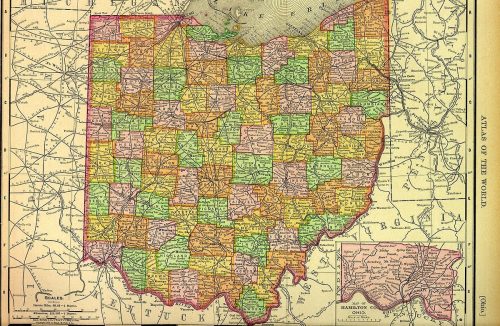 Republican Jon Husted, the former lieutenant governor, became the incumbent when he was appointed to fill the seat by GOP Gov. Mike DeWine. Ohio has been quite red over the past several elections, but now the Senate race is tight, with former three-term senator Sherrod Brown having led in polls since August. Brown is a former senator who lost reelection in 2024. He is campaigning against “giving massive tax breaks to corporations and billionaires at the expense of hardworking Ohioans,” and his record includes advocating for abortion rights, gun control, fair trade, and healthcare reform.
The Governor’s race is also noteworthy, since DeWine is term-limited. Democrat Amy Acton is facing Trump acolyte Vivek Ramaswamy, and with recent polls showing Acton ahead by upwards of nine points. Acton, who “worked her way out of poverty to become a doctor” (pediatrician), spent a portion of her early career tackling the crack cocaine epidemic. She started the inaugural residency rotation in child advocacy and led Project LOVE, a partnership between hospitals and community leaders with the goal of improving preventive care for youth. She has also served as a professor at The Ohio State University and, in 2019, was appointed by DeWine as director of the Ohio Department of Public Health. At the Columbus Foundation, she has worked to fight youth homelessness and improve women’s health, and she is a 2021 recipient of a John F. Kennedy Profile in Courage Award.
Oklahoma
Several stories out of Oklahoma show a level of national interest even in an historically deep red state. Trump’s unprecedented midterm rally on October 1st was held in a small Oklahoma town, Durant. It was the first time in six years that Trump had officially visited the state. This may indicate that Republicans are running a little scared even here; apparently Democrats at the national level are attempting to flip the congressional seat in the Oklahoma City area that has been held by GOP US Rep. Stephanie Bice since 2021. Bice is running against Jena Nelson, who has an interesting background: a nonprofit development professional, corporate leadership developer, and small business owner who recently served as acting Executive Director and Director of Programs for the Oklahoma Faith Network and is married to a university professor and church choir director. National Democrats may be onto something, given recent polls, which find the candidates tied at 48% once they know more about Nelson. She is at 55% with independents and, among voters who know her, leads Bice 61% to 30%.
Pennsylvania
Political news comes out of Pennsylvania fairly frequently.  A swing state, it went for Democratic presidents in seven elections since 1980 (including Biden) but chose Trump in 2020 and 2024; and it has had five Republican and seven Democratic governors since 1978. Current US Sen. John Fetterman (who is not on the ballot in 2026) is ostensibly a Democrat but has recently sounded more like a Republican and become isolated from Dems. Democratic Gov. Josh Shapiro may be eyeing a presidential bid in 2028 and is overwhelmingly favored to win reelection as governor this time around.
At the state level, there are interesting developments that favor Democrats. A special election in the 12th state House district was held on August 18th due to the resignation of Republican Stephenie Scialabba in March. The victory of Democrat Brendon Dukes is significant because no Democrat has been elected to the Pennsylvania House in that district for over 20 years. Dukes will face Republican Scott Timko in November.
In other state races in the Commonwealth, Dems are “looking to flip four state Senate seats [which] would give Democrats a trifecta — control of both chambers of the general assembly and the Governor’s Residence — for the first time since the early 1990s.” Dems further take heart from the trend indicated by the special election in 2025 in which Democratic State Sen. James Malone unexpectedly won a seat in a Lancaster County district that Trump had won by over 15% in 2024.
Rhode Island
Intriguing things are happening in the tiny state of Rhode Island in this election cycle. It made history in the Democratic primary when Gov. Dan McKee became the first governor in any US state to lose a party primary since 2018. He was defeated by Helena Foulkes, former senior executive at CVS and Canadian retailer Hudson’s Bay, who will face Republican Aaron Guckian and several Independents. With so many Independents on the gubernatorial ballot, polls are tight, but some signs point to good momentum by Foulkes, who is running on a platform of leadership ability, “courage, competence and care” and vows to “fight back against Donald Trump’s attacks on our state.”
In another Democratic primary surprise, a young member of the DSA, current State Rep. David Morales, beat the incumbent mayor of Providence, Brett Smiley. [] Morales is endorsed by Vermont Sen. Bernie Sanders (I), US Rep. Ro Khanna (D-CA), the Rhode Island Working Families Party, the American Federation of Teachers/Rhode Island Federation of Teachers (AFT/RIFT) Local 6516, and the Providence Teachers Union (PTU) Local 958.  Morales, 27, is running against Republican David Talan, whose platform includes neighborhood schools, lower taxes and school choice. Morales is being compared to New York City Mayor Zohran Mamdani, who both represent “a string of victories [across the country] … aligned with the democratic socialist movement.”
South Carolina
With the sudden death of long-time GOP Sen. Lindsey Graham in July and the special election and primary victories of his sister, Darline Graham, for his seat, the situation in the deep red state of South Carolina is different than it looked like several months ago. Dr. Annie Andrews, a pediatrician, is the Democratic candidate and has earned the slur of “trannie Annie” from Trump on his social media platform. Trump is particularly interested in the SC race because of his long relationship with the late Sen. Graham – and perhaps also because the race is now tighter than he would like, even though it is still a stretch for Dems. The facts, however, are important for voters to know: Dr. Andrews has been intimately involved in fixing our broken healthcare system, helping people for two decades who coped with patients’ mental health challenges, promoting gun safety, and combating high medical costs. She is endorsed by Emily’s List and other organizations.
In addition, because of a large African American population, the Democratic National Committee voted in August 2026 to hold South Carolina’s primary as their first in the nation – on January 22, 2028.
Tennessee
Americans will probably recall the political controversies that took place in 2023 when Democratic state Rep. Justin Pearson and others were expelled from the Tennessee House for protesting in support of gun control measures; on April 12, 2023, the Shelby County Commission voted to reinstate him. Pearson, who is Black, was then reelected by voters, is running again for reelection and is also on the ballot for the US House. Pearson is facing Trump-backed state Sen. Brent Taylor “in another vastly reconfigured U.S. House district” following the Supreme Court’s weakening of Voting Rights Act protections for minorities. Recently, the “Democrats’ House campaign arm gave Pearson’s bid … a vote of confidence, adding Tennessee’s 9th district to its coveted ‘Red to Blue’ list,” even though the Cook Political Report still judges the district as Solid Republican. It would certainly seem that Pearson is making his mark on the world, no matter what happens in a few weeks.
Texas
Texas has burst onto the scene as possibly within reach for a Democratic flip of a GOP Senate seat. This is due to the superb campaign being waged by a young seminarian, former middle school teacher, and Democratic state legislator James Talarico. Talarico defeated prominent US Rep. Jasmine Crockett in the primary and has been involved in a controversy involving Stephen Colbert, which bolstered his national profile. The last Democrat to be elected to the US Senate in Texas was Lloyd Bentsen, in 1988.
The other noteworthy aspect of this Senate race is what has happened on the GOP side. Incumbent John Cornyn (R) lost to Paxton in the Republican primary runoff – in large part because Trump decided to support scandal-plagued Paxton because Cornyn had been “disloyal” to him. Paxton claims that Talarico is “the most radical Democrat in Texas history,” while Paxton’s portfolio includes indictment on charges of securities fraud central and being “directed [in 2024] to pay nearly $300,000 in restitution” and impeachment by the GOP-controlled Texas House. In addition, his wife has filed for divorce “on biblical grounds.” In current polling, Talarico and Paxton are virtually tied.
The gubernatorial race in Texas also gives Democrats some hope. State Rep. Gina Hinojosa is running against prominent GOP incumbent Greg Abbott. Hinojosa, civil rights and union lawyer, helped secure over $11 billion for Texas public schools, raised teacher pay rates, sponsored legislation that delivered almost $1 billion in federal funding for health care in Travis County, and passed legislation to ensure that businesses serve the public good, not just shareholders. Abbott leads Hinojosa 48% to 44%, with the margin of error rate of +/-4.5.
Vermont
Vermont has a very popular governor in Republican Phil Scott, but his popularity has slipped, and Democrats are hoping for victory with Amanda Janoo, who works as the Economics and Policy Lead for the Wellbeing Economy Alliance. 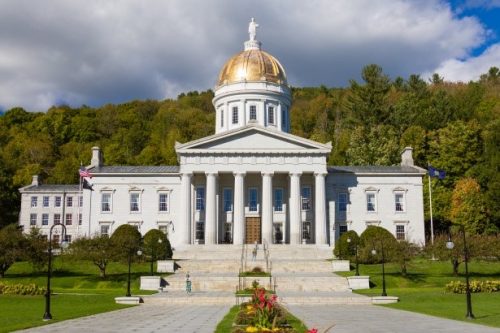 Her career, which includes coalition-building and board service for ACLU of Vermont and Rights & Democracy, has focused on tax fairness, community wealth building, democratic participation, and long-term economic resilience. Scott is running on a platform of a package of tax cuts or credits. Janoo believes that Scott’s “decade-long refrain … against new taxes and fees hasn’t helped the state make progress” and is proposing ideas around taxing the wealthy, imposing a tax on second homes, and taxing big tech on their digital ads. Polling suggests that these ideas have some level of popular support. Janoo has been endorsed by Sen. Bernie Sanders and US Rep. Ro Khanna (D-CA), among others.
In the one US House race, Democrat Becca Balint has emerged as a feisty voice on the national scene in her two terms under GOP control. A former teacher, Balint served as President Pro Tempore of the Vermont Senate from 2021 to 2023, the first woman and first openly gay person to hold the position. She was then elected the first woman and the first openly gay US Representative from the state. In Congress, she has worked on such issues as housing, gun violence prevention, and reproductive and LGBTQ+ rights. She sits on the House Judiciary Committee and is an original cosponsor of the Freedom to Vote Act, the John Lewis Voting Rights Act, and other voting rights legislation, and the Green New Deal. She is heavily favored to win reelection over Republican challenger Gerald Malloy. Malloy is an Army veteran and defense contractor who lost US Senate races to both Bernie Sanders and Peter Welch.
Virginia
Virginia’s long-term Democratic US Senator, Mark Warner, is favored to win reelection against Republican challenger Bert Mizusawa, and the office of governor – held by Democrat Abigail Spanberger (the first female governor of the Commonwealth) – was already decided in late 2025. So this election cycle will focus more on the US House. With six of the 11 US House seats being held by Democrats, and those incumbents predicted to be reelected, it is two of the five remaining House seats – in the 1st and 5th Districts – that are making Republicans nervous. According to a recent poll, Democrat Shannon Taylor leads Rob Wittman 50%-46% in the 1st District; Wittman had won there by 13 points in 2024. Taylor has served as the top prosecutor in Henrico County for the past 14 years, resulting in a 90% homicide conviction rate and an 86% drop in Henrico’s murder rate over the past year. Her campaign for the House seat also focuses on fighting corruption in Washington, supporting a ban on members of Congress trading stocks while in office, “placing a lifetime ban on members of Congress becoming lobbyists, mandating jail time for members of Congress who steal taxpayer funds, and 12-year term limits for members of the House and Senate.”
In the 5th District, incumbent Republican John McGuire leads Democrat Tom Perriello 51%-45% – but Perriello has gained momentum and outraised McGuire. Perriello won his US House election in 2008 and served one term. In this race, he is criticizing McGuire for maintaining “that today’s higher gas prices don’t have anything to do with the Iran war” and for McGuire’s support of the so-called Big Beautiful Bill – which has resulted in the closure of healthcare facilities in the district.
Wisconsin
Wisconsin has become a purple state in recent years, which makes it highly significant for the balance of power in Washington. Since 1988, voters in Wisconsin have chosen Democratic presidents in every election – except for Trump’s very narrow win over Hillary Clinton in 2016 and his win over Kamala Harris in 2024. Wisconsin has one Republican US Senator, Ron Johnson, and one Democratic US Senator, Tammy Baldwin, neither of whom are up for reelection this year. The state has six GOP US House Representatives and two Democrats.
In this cycle, the most noteworthy House race is in the 3rd District, with GOP Rep. Derrick Van Orden trying to hold his seat against challenger Rebecca Cooke. Republicans appear to be nervous about this seat: House Speaker Mike Johnson recently visited the district to rally support for Van Orden. Not surprisingly, Johnson claimed that Cooke and other Democrats are leading us down the “dark, dangerous road to communism.” We have to wonder how many voters will believe the Republicans’ smears once they know her. Her family background includes farmers and veterans; she worked her way through college; she started both a small business and “a nonprofit organization that has helped over 70 small businesses create local jobs;” and she has served on the Wisconsin Economic Development Corporation board. In recent polling, Cooke is leading Van Orden 50% to 46%, and Van Orden’s (un)popularity in his district is also encouraging for Democrats: “53% unfavorable, including 46% who view him very unfavorably.”
Final thoughts
 As we have stated many times in the past, voting is a critical action the vast majority of us can take to preserve our democracy. All of us who plan to vote in this election should make sure we are ready: time is running out.
- If you can and plan to vote early or via absentee ballot, make sure you know the procedure, follow it carefully and vote by the deadline.
- If you plan to vote in person on or before November 3rd, know your polling location, hours and regulations around voting interference. If possible, do not wait until the last minute.
- Respect and honor our dedicated election officials and poll workers. Report any problems to the appropriate officials. Note that it is against federal law to interfere with voting or to intimidate voters; in fact, three federal laws criminalize federal interference in elections.
- If you are able and there is a program in place in your community, help voters who need assistance.
- Follow election coverage from reliable, respected sources that base results and analysis on evidence. Do not be swayed, discouraged or led stray by disinformation or outright lies.
We may not know the results of these crucial contests on November 3rd or even for a few days later, depending on a number of factors. Trump and others will try to convince Americans that, if his chosen candidates lose, it is due to massive fraud perpetrated by liberals, socialists, communists or “deep state” actors. By now, we should realize how insidious this stance is.
We must also be on the alert for political violence. In many instances over the past 10 plus years, the words of Trump and other right-wing actors have led to violent acts – and pardons of lawbreakers who have supported Trump (a convicted felon himself, as we well know). We must keep ourselves and loved ones safe; we must prevent violence as much as possible; and we must support officials who bring wrongdoers to justice.
We hope this series has been helpful to readers; all elections are important, but these midterms are especially vital considering how effective Trump and his cronies have been in dismantling significant foundations of our democratic republic.
Here is hoping for a smooth, fair, productive election season in the coming weeks.