
In Part I of our three-part series on matchups to watch, we saw interesting and controversial contests in a number of states in the first third of the alphabet. 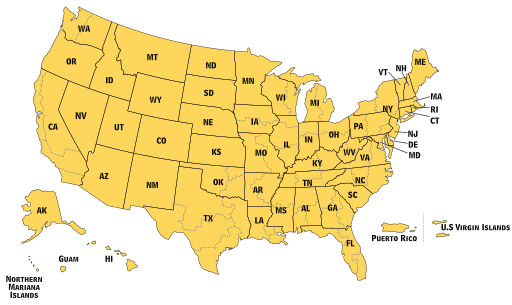 Things change quickly in this political climate, so in the past few weeks, the highly-respected Cook Political Report has moved a number of race ratings in the Democrats’ favor (or at least less favorable for the GOP).
As the primaries and special elections draw to a close, in this post we will take a look at examples from Louisiana through New York. In Part III (October post) we will finish up with North Carolina through Wyoming. (There is not much to report from Kentucky.) In the interests of space, as earlier, we will omit states that have relatively little controversy or national interest (and again with apologies for oversights).
Louisiana
The main race in Louisiana that has been making the news is that for US Senate. Sen. Bill Cassidy, a physician and long-time Trump supporter who was the deciding vote that confirmed Robert F. Kennedy, Jr., for Secretary of Health and Human Services, found himself on Trump’s bad side because of his vote to impeach Trump. In a run-off election in June, in which Cassidy did not even qualify, Trump-backed US Rep. Julia Letlow came out on top. While Letlow is almost certain to win the Senate seat in ruby-red Louisiana, current polls are actually quite close between her and her Democratic opponent, farmer Jamie Davis. With Letlow only 4 points ahead (41%, 37% Davis, 22% undecided) and Trump’s approval ratings extremely low, there may be a chance for Davis and the Dems.
Maine
The Senate race in Maine has been very noteworthy for months. Democrats are hoping fervently to oust five-term Republican Susan Collins.  She has admittedly done quite a bit for her state over the past 30 years, but she has also waffled on a number of significant issues and votes, which Democrats are using to their advantage. To take one example, while Collins has branded herself as a moderate and in favor of reproductive rights, she was a significant vote to confirm Brett Kavanaugh as a Supreme Court justice, who subsequently voted to overturn Roe v. Wade in 2022. Other issues being used by Democrats include Collins’ split votes on Trump’s impeachments (for impeachment in 2021, against impeachment in 2020) and her votes on healthcare issues. Collins is now up against an unlikely but formidable opponent in former state Senate president Troy Jackson, who replaced former candidate Graham Platner after he withdrew in the midst of allegations of sexual misconduct. Recent polls show the race as very close; Democrats are hoping that Collins is more vulnerable than she has ever been and that her seat turns blue.
Maryland
Maryland is a very blue state. In this cycle, the most noteworthy controversy is whether Democratic Gov. Wes Moore, who is running for reelection, is too far left. Moore, who is Black and has a 56% approval rating as of mid-August, is being criticized from several sides. But debating his political labels might be a distraction. His office, as per spokesperson Ammar Moussa, maintains that Moore “supports leaders who are prepared to disrupt a broken status quo, lower costs, expand pathways to work, wages, and wealth, and deliver results for the people they represent.” Moore has not been endorsed by the DSA or Working Families Party or more traditional sectors, such as labor unions, but he has generally been very supportive of progressive policies and initiatives. The “socialist” versus moderate debate among Democrats is emerging as significant in this election cycle, but we must be cautious of falling into a “labels” trap supported, if not conjured, by the right.
Massachusetts
The Commonwealth is also primarily blue at all government levels, although it has had Republican Governors in the not-too-distant past: Charlie Baker, Mitt Romney, Jane Swift, Paul Cellucci (Acting), and Bill Weld. 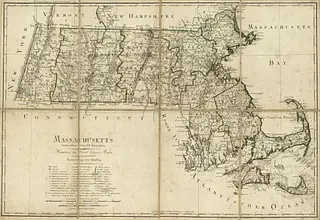 The main newsworthy primary race in this cycle was for Senate on the Democratic side. US Representative Seth Moulton challenged incumbent, 80-year-old Edmund Markey – and lost. Markey was endorsed by two DSA members who serve in Congress – Sen. Bernie Sanders (I-VT) and Rep. Alexandria Ocasio-Cortez (D-NY) – along with Sen. Elizabeth Warren (D-MA) and Rep. Ayanna Pressley (D-MA). Markey supports “advancing a national Medicare for All program, universal early learning programs, tuition-free community college, and efforts to codify a Transgender Bill of Rights.” Markey is opposed in November by Republican John Deaton, who does not seem to share many of the more extreme GOP or MAGA views. He has stated that he is not courting Republican votes but rather those of moderate Democrats and Independents.
Current Democratic Gov. Maura Healey, running for reelection, is being challenged by Republican Michael Minogue. He is a graduate of West Point, has served in the US Army, has held positions at General Electric Healthcare and Abiomed, Inc., and founded MedTechVets, a nonprofit helping military veterans find careers in the medical device industry. Healey was the “first woman elected Governor in Massachusetts history and the first openly lesbian Governor elected in the country.” Her accomplishments include cutting taxes, building more homes to lower costs, opposing utility rate increases, and capping health care deductibles and co-pays for the first time. Thanks to her record investments in Mass. schools, they now rank among the best in the nation. She has been very vocal in her criticisms of Trump. While just half of Massachusetts residents approve of Healey’s overall job performance, she is still favored to be reelected.
Michigan
Michigan is always a significant swing state. With Democratic Sen. Gary Peters not seeking reelection, Republicans are running former US Rep. Mike Rogers in November (and there are several other candidates on the ballot). In an important shake-up on the Democratic side, it was Abdul El-Sayed who defeated moderate Democratic Rep. Haley Stevens in the primary. El-Sayed, a physician who supports Medicare for All and limiting aid to Israel, has – not surprisingly – been the subject of harsh criticism, and lies, from the likes of VP JD Vance and others. Vance has referred to El-Sayed as “very, very evil” and baselessly accused him of wanting to impose sharia law and defending “literal terrorism.” El-Sayed, who is endorsed by Vermont Sen. Bernie Sanders and US Rep. Alexandria Ocasio-Cortez of New York, calls himself a progressive but not a socialist.
Minnesota
Minnesota is another state where the Democratic Senator, Tina Smith, decided not to run for reelection.  Minnesota leans blue, with Democrats having prevailed in the six presidential elections between 2004 and 2024, and with Democrats controlling the governorship (outgoing governor and 2024 VP candidate Tim Walz) and the state Senate. Control of the state House is split between parties. The other US Senator in Minnesota is Democrat Amy Klobuchar, who is running for Governor. If she wins, a temporary appointment will be made for her Senate seat, with a subsequent special election to follow. (If she loses the Governor’s race, she will return to the Senate; her term is not up until 2031.)
Klobuchar’s opponent is Minnesota Rep. Lisa Demuth, “a fervid abortion opponent” but otherwise fairly moderate. What was noteworthy about the primary race was that Demuth defeated the “pillow guy,” Trump champion Mike Lindell. Lindell has refused to concede the race and offered to pay for a recount, but the Minnesota Supreme Court denied his request.
Mississippi
Mississippi is historically a very red state. Republican Sen. Cindy Hyde-Smith has held the office since 2018, and Trump took the state with 60.9% of the vote in 2024. However, recent polling suggests that Hyde-Smith might be vulnerable. She has a net favorability rating of -10 points – 50% of respondents unfavorable versus 40% favorable. Hyde-Smith’s opponent is Democrat Scott Colom, who is Black and has served as prosecutor, judge, and highly-regarded District Attorney. In recent polls, Hyde-Smith has a 6-point lead over Colom (44-38%), with independent candidate Ty Pinkins receiving an additional 7 percent of the vote.  This is significant in such a conservative state, which has a large Black population; a good turnout among African Americans on November 3rd could tip the scales in the Dems’ favor.
Americans will also recognize the name Bennie Thompson. The 78-year-old Democratic US Representative – a civil rights leader who chaired the House Jan. 6 Committee and serves as a ranking member on the House Homeland Security Committee – has held his seat for 17 terms but was challenged in the primary by Evan Turnage, “a 34-year-old who formerly served as counsel to then-Senate Majority Leader Chuck Schumer and Sen. Elizabeth Warren.” This contest was another example of long-time elected officials being challenged by newcomers. Thompson is Mississippi’s longest-serving African American elected official and will face Republican Ronald Eller in November. According to his website, Eller stands for “Free Enterprise, Limited Government, Individual Liberties, National Defense, and Traditional Values.” His “traditional values” include “America first” economics, not cutting our use of fossil fuels, concealed carry licenses being “valid across all jurisdictions,” abortion availability only in the case of saving the mother’s life, the right to refuse a vaccine or treatment based on personal choice, and required voter IDs and no same-day voter registration.
N evada
evada
Nevada is a significant swing state that has not garnered too much attention in this cycle because it is not a presidential or senate election. However, the state has an interesting political makeup that makes it worthy of national attention. The state is one of 11 with a divided government: Republican Joe Lombardo is the current Governor, but the Attorney General and Secretary of State are both Democrats, and Dems hold the state Senate and Assembly. Lombardo is being challenged by Democratic Attorney General and former state senator Aaron Ford. Lombardo has supported Trump on most issues, while Ford, who is the first Black AG in Nevada history, comes from a working-class family, became a single father who relied on Medicaid and food stamps, was educated in public schools, and went on to earn five degrees. Lombardo and Ford are running only two percentage points apart in recent polling, and The Cook Political Report has rated the race as a “toss-up.”
New Hampshire
With Democrat Jeanne Shaheen not seeking reelection, the Senate race is critical and could have national implications. The recent primary resulted in US Rep. Chris Pappas (D) running against former Republican Sen. John E. Sununu – son of former Gov. John H. Sununu and brother of former Gov. Chris Sununu. John E. had lost the 2008 governor election to Shaheen after having beaten her in 2002; he is being endorsed by Trump. Pappas, the first openly gay US House member elected from New Hampshire, has worked in Congress to ban stock trading by members, to lower drug prices and cap the cost of insulin at $35, and to challenge corporate polluters who have contaminated our drinking water and predatory companies who take advantage of veterans. Polls show Sununu and Pappas very close as November 3rd looms.
In the US House races, another name familiar to New Hampshire voters is on the ballot for one of two seats: Democrat Stefany Shaheen, daughter of the outgoing Senator. She will face Portsmouth car dealer Anthony DiLorenzo, who has been endorsed by Trump.  This is the seat being vacated by Pappas, who has been elected in the past three elections. Shaheen has worked as a health care advocate, entrepreneur, Portsmouth City Councilor and chair of the Portsmouth Police Commission and is being endorsed by former NH Gov. John H. Lynch (D), US Sen. Mark Kelly (D-AZ), and several unions.
The other House race pits incumbent Democrat Maggie Goodlander against Republican Lily Williams and Independent Robbie Mahrou. Attorney Goodlander has served as a foreign policy advisor in the US Senate, an intelligence officer in the Navy Reserve, a professor of constitutional law at the University of New Hampshire and Dartmouth College, a deputy assistant attorney general for the US Department of Justice, and a senior advisor at the White House. Significantly, “Maggie is banned from Russia because of her work on a landmark sanctions law designed to impose sanctions on Vladimir Putin and his regime.”
The NH Governor’s race is also significant. Incumbent Republican Kelly Ayotte (since 2025) has served in several other offices and is a familiar name in the state: US Senate (2011-17) and Attorney General (2004-09). In the 2016 Senate race, she was defeated by Democratic challenger Maggie Hassan. Ayotte’s main opponent this time is Democrat Cinde Warmington, an attorney from Concord who has worked as a health care attorney, chair of the Health Care Practice Group at Shaheen & Gordon, P.A., in laboratory medicine, and in health care management. Warmington has been endorsed by Planned Parenthood NH Action Fund PAC, NH AFL-CIO, the National Women’s Political Caucus, Iron Workers Local 7, and Rights and Democracy NH. Currently Ayotte is ahead of Warmington in polls, but voters should know where Ayotte stands on crucial issues such Medicaid, cuts to important agencies, and the cancellation of contracts with Planned Parenthood of Northern New England, according to Warmington. Also, Ayotte has had a complicated relationship with Trump, which should be warning enough.
New Mexico
It is the Governor’s race in New Mexico that is garnering the most attention nationwide, pitting Democratic former Secretary of the Interior and US Rep. Deb Haaland against Republican Gregg Hull. Haaland was the first Native American cabinet secretary in US history (Laguna Pueblo) and received bipartisan support during her nomination process. As a congresswoman, she was able to work across the aisle and secured “more bipartisan cosponsors for her legislation than all House freshmen in 2019, and [introduced] seven bills signed into law by President Donald Trump – among the most of any member of the House that Congress.” In her personal life, she was raised in a military family, experienced homelessness, was a single mother, earned a law degree, and ran her own small business.  Former Democratic Secretary of Transportation Pete Buttigieg is endorsing Haaland.
Hull is the longest-serving mayor of Rio Rancho, running on his record of delivering results in job creation, infrastructure, water, public safety, and accountable government. He has also said that getting an endorsement from Trump would be a “pretty cool thing.” Hull and Haaland are running a close race at this time, with Haaland slightly ahead.
New York
New York voters have chosen a number of Democrats over the past years who hold influential positions in government:
- Kathy Hochul, Governor
- Letitia James, the first woman of color to hold statewide office in New York and the first woman to be elected Attorney General; running for reelection against Republican/Conservative Party Saritha Komatireddy
- Charles E. Schumer, US Senator and Senate Democratic Leader
- Kirsten E. Gillibrand, US Senator
- US Rep. Hakeem Jeffries, leader of the House Democratic Caucus and House minority leader
- US Rep. Alexandria Ocasio-Cortez, the youngest woman and youngest Latina ever to serve in Congress
Kathy Hochul is running for reelection against Bruce Blakeman (Republican, Conservative Party/Vote Affordable Party), Jonathan Makeley (Prohibition Party), and Jean Anglade (Independent). Hochul, not unexpectedly, faces criticism from many sides, but her fundraising success from a broad range of donors speaks well of her track record, and she is ahead in most polling.
Letitia James has become very well-known nationwide in part because of the massive civil fraud lawsuit her office filed against Donald Trump, his adult sons, and the Trump Organization in 2022. The suit accused the defendants of fraudulently inflating asset values to secure favorable loan and insurance terms. James won, Trump et al countersued, and an appeals court affirmed the decision. However, the appellate panel felt that the $500 million financial penalty was excessive and threw it out, but left the non-financial penalties, such as corporate leadership bans, intact. James’ aggressive stance toward Trump’s lawlessness – in addition to the fact that she is a Black woman and that she is leading many AGs throughout the country in other suits against Trump – has led Trump to retaliate against her.  His minions in the DOJ charged her in October 2025 with lying on a mortgage application, which resulted in a federal judge dismissing the criminal charges in short order because “the Trump-picked U.S. attorney who brought the case was unlawfully appointed.” A few months later, “a federal grand jury in Virginia refused to indict James on allegations of mortgage fraud for the second time.” The courage of James and her staff in standing up to Trump is breathtaking and worthy of the admiration and support of all Americans who seek to uphold the rule of law and protect our democracy.
Hakeem Jeffries, running for an 8th term in the US House, is leading House Democrats to govern “in the minority as if in the majority by successfully enacting multiple bills into law by way of discharge petition.” Over the years, Jeffries has worked with Republican colleagues to pass a number of bills that have been signed into law. As Leader, he has been adroit in keeping his caucus together to oppose the Trump Administration’s “chaos, cruelty and corruption being unleashed on the American people.” Jeffries’ opponent in November is Lewis Mizrahi; the information on him is very thin, and the Cook Political Report rates this race as Solid Democrat.
Alexandria Ocasio-Cortez (AOC) is one of the most prominent elected officials in the country who identifies as a democratic socialist, even though her membership lapsed for a number of years.  She is an excellent fundraiser, is aligned with progressives known as “the squad,” and held Fighting Oligarchy rallies all over the country with Vermont Sen. Bernie Sanders (I, DSA member) in 2025. Consequently, AOC is a frequent target of the right.
In another NY race, US Rep. Dan Goldman, who was defeated in his primary by Brad Lander of the Working Families Party, is well-known through his role as counsel in Trump’s first impeachment proceeding. Lander will face Republican/Conservative Party Jennifer Moore in November. Lander is being endorsed by Sen. Sanders, NY Mayor Zohran Mamdani (D, DSA member), and Sen. Elizabeth Warren (D-MA), among others. Comptroller for the City of New York, Lander differentiated himself from Goldman primarily by criticizing him for not being forceful enough in speaking out against Israel’s war in Gaza. Jennifer Moore’s stated goal is to “seize this opportunity and engage more support from voters registered to all parties who oppose Lander’s radical ideology.”
—————————————————————
Many of the Democratic candidates noted above and in Part I are African Americans, Native Americans, Asian Americans, Hispanics, women, members of the LGBTQ+ community, or others from underrepresented groups and can use as much support as we can give them. If Trump, Stephen Miller, many of the wealthiest white men in the nation and in Trump’s circle, white nationalists, and others on the right and far right have their way, none of the highly talented, worthy and dedicated individuals we have highlighted on the Democratic side would even be able to vote, let alone run for office.  We are very fortunate in this country to have such a diverse range of people willing to put themselves out so courageously to serve the common good; we cannot let negative forces erase decades of progress that has made this possible.
Onward toward the election!